
 Canada
 USA
 Japan


Wakizashi vs Gladius: Two Short Swords Compared

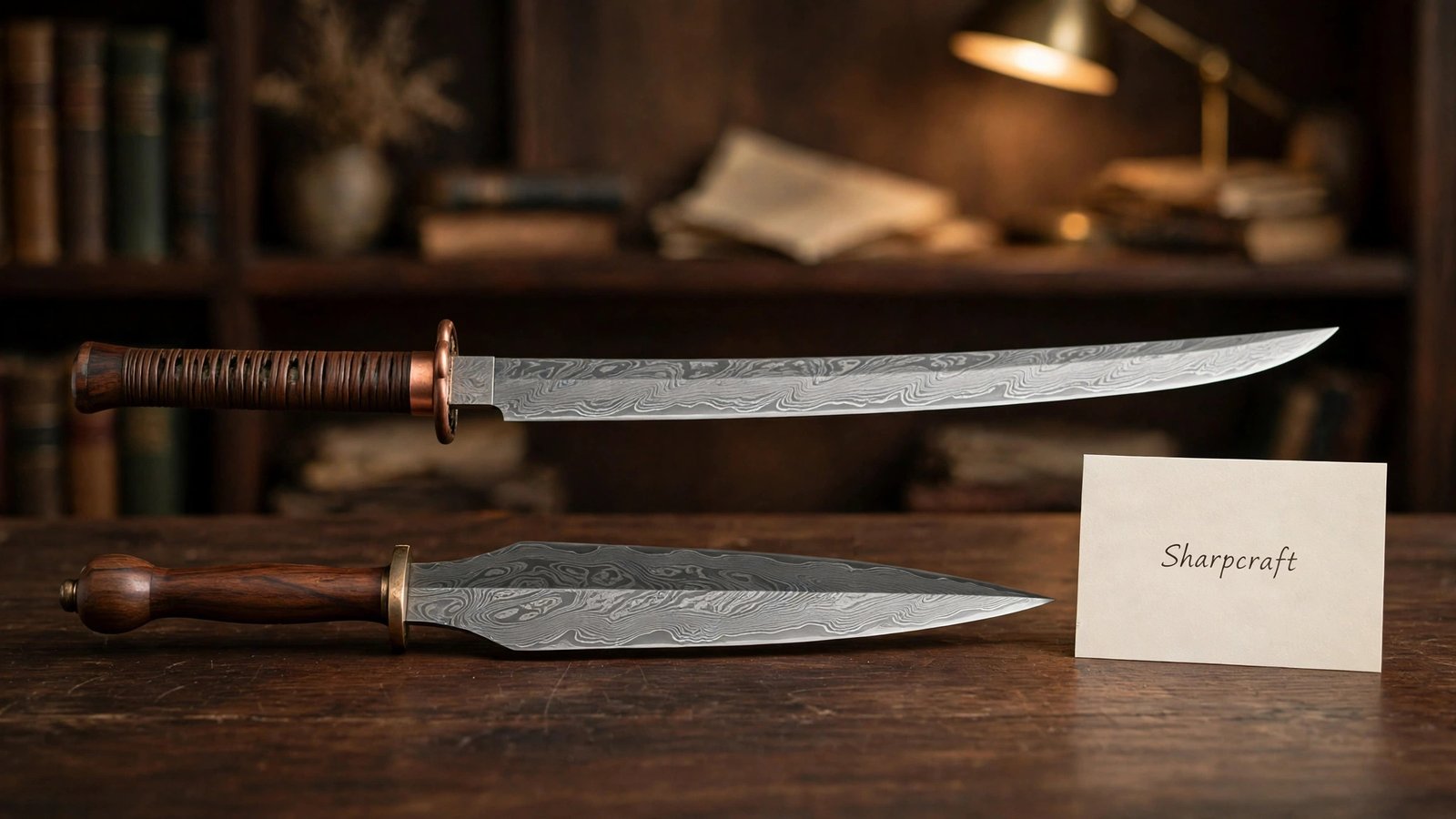
Two short swords, two very different ideas about what a blade should do. The gladius carried Rome’s legions through close-quarters fighting, and the wakizashi rode at the samurai’s side as a companion to the katana. Both are short, both are serious, and both are still collected and displayed today. This comparison looks at what each sword is, how its blade is shaped, what it does best, and how it feels in the hand, so you can decide which tradition belongs in your collection.
What Each Sword Is
The gladius is the Roman leaf-bladed short sword, built for close work. Its blade is straight, broad through the middle, and double-edged, tapering to a sharp point. Roman soldiers used it in tight formation, where there was little room to swing, and it became one of the most recognizable weapons of the ancient world. Today, a gladius is a piece of Roman history you can hold, and it reads at a glance as a soldier’s sword.
The wakizashi is the Japanese curved short sword, the samurai’s companion blade. Worn with the longer katana as part of the daisho, the pair of swords, it was the blade a samurai kept close at hand indoors and in everyday life. Its single edge curves gently along its length, and its look is unmistakably Japanese: elegant, restrained, and shaped by centuries of craft. Where the gladius speaks of the legion, the wakizashi speaks of the samurai.
Blade Shape, Side by Side
Put the two blades side by side and the contrast is immediate. The gladius is straight and double-edged, with a leaf-shaped widening toward the middle of the blade. Both edges cut, and the point is made for thrusting. It is a symmetrical, businesslike shape, and it feels the same in either hand.
The wakizashi is curved and single-edged, with a thick spine on one side and a keen edge on the other. The curve means the edge meets its target at an angle as the blade moves through a cut, drawing across rather than pushing straight through. In the hand, the wakizashi feels directional: the spine tells you where the edge is, and the curve guides the cut. The gladius feels like a thrusting tool that can also cut; the wakizashi feels like a cutting tool through and through.
What Each Sword Does Best
The gladius does its best work as a thrusting sword and as a display of Roman history. Its straight, double-edged blade and sharp point are made for a direct, forward thrust, and its broad leaf shape gives it presence on a wall or in a collection. If you are drawn to Rome, to legions and centurions, and to a blade with two cutting edges, the gladius is the natural choice.
The wakizashi does its best work in slicing cuts and as a display of Japanese craft. Its curved, single edge is made to draw through a cut, and the long, clean line of the blade shows off the maker’s work, from the fold of the steel to the polish of the edge. If you are drawn to Japan, to the samurai tradition, and to a blade whose beauty is in its curve, the wakizashi is the natural choice.
Weight and Handling
Sharpcraft’s versions of both swords use 12-inch blades and come in at about the same weight, so neither one is the heavyweight of the pair. The difference is in where that weight sits. The gladius balances at the middle, which makes it feel steady and neutral in the hand. It does not pull forward or back, and it points naturally, which suits a thrusting blade.
The wakizashi carries its weight along the curve. The blade feels alive as it moves, with the curve leading the cut and the edge following through. It is not heavier, but it feels more directional than the gladius, and the handling rewards a smooth, drawing motion rather than a straight push. Pick both up, if you can, and the contrast in balance is easy to feel.
Which One Should You Buy?
Choose by the tradition that speaks to you. If you want Roman history and a double edge, take the gladius. Its straight leaf blade, sharp point, and central balance make it the classic short sword of the ancient world, and it looks right in any collection of historical arms.
If you want Japanese craft and a curved blade, take the wakizashi. Its single-edged curve, companion-sword heritage, and slicing character make it the classic short sword of the samurai tradition, and it looks right beside a katana or on its own.
And if you cannot choose, buy both. Together, the gladius and the wakizashi cover two of the great sword traditions in a single pair, and the contrast between them is the point: straight against curved, double edge against single edge, Rome against Japan. Either one is a fine short sword. The pair is a small museum of the short sword itself.
Sharpcraft’s Wakizashi and Gladius Pair
Sharpcraft makes both swords in matching hand-folded Damascus steel, with rosewood handles, made to order. The new Wakizashi Short Sword 12-inch (Batch 11) brings the curved Japanese companion blade to the range, while the Gladius Short Sword 12-inch (Batch 10) brings the straight Roman leaf blade. The two share the same materials and the same care in the making, so they sit together naturally as a pair.
Whether you start with the wakizashi or the gladius, you are getting a hand-folded Damascus short sword made to order, not a mass-produced replica. Choose the tradition you love, or take both and let the two short swords tell the story together.