
 Canada
 USA
 Japan


Barlow vs Folding Hunter: Two Traditional Folding Knives Compared

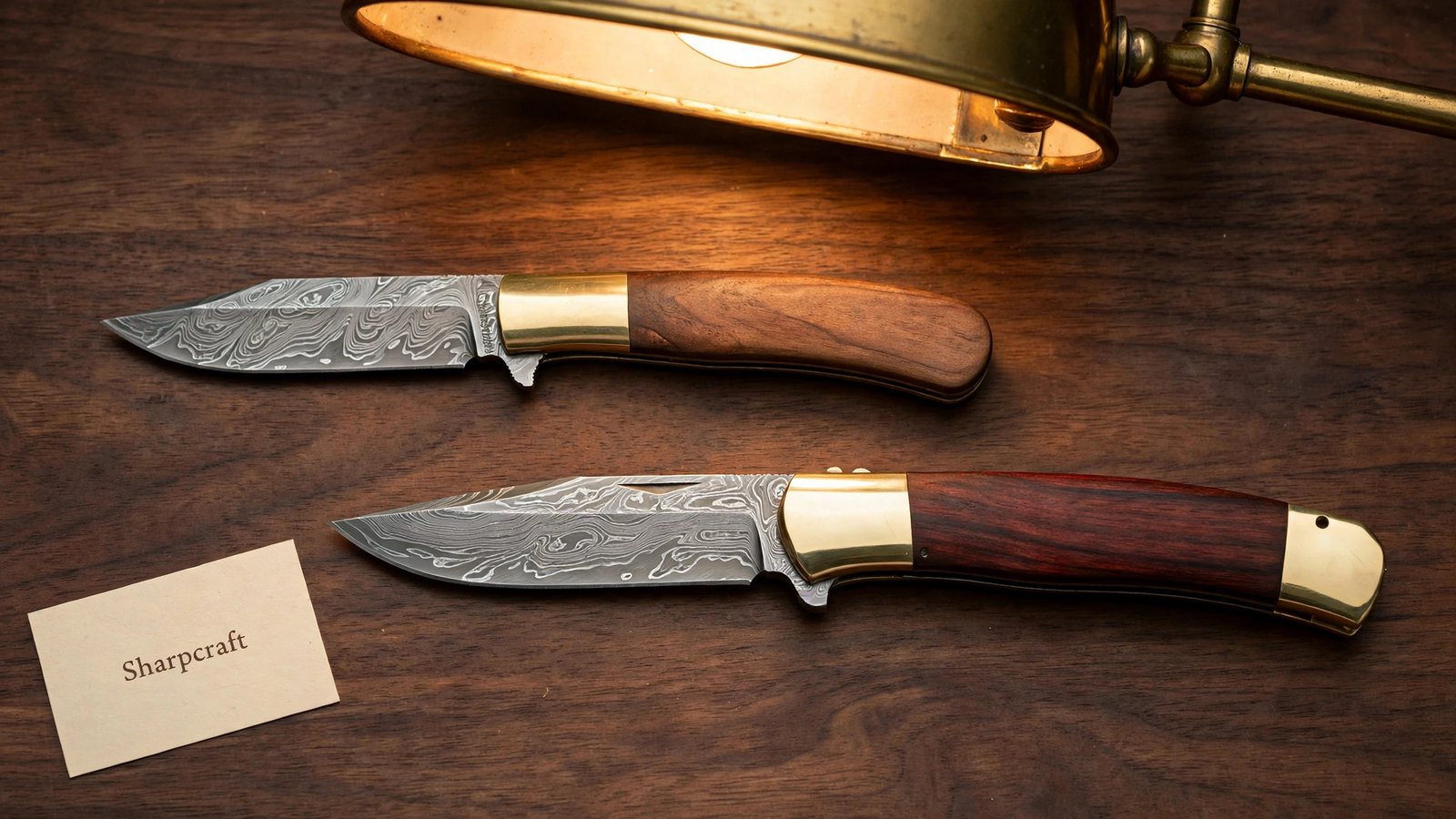
Two classic folding knives, two very different ideas of what a pocketknife should do. The Barlow Folder and the Folding Hunter both come from Sharpcraft’s Batch 15, and both are hand-folded Damascus lock-back folders — yet one is a compact everyday companion and the other is a larger knife built for the field. In this barlow vs folding hunter comparison, we look at size, steel, handles, carry and price, so you can decide which traditional folder fits the way you actually use a knife. Both arrive ready to use — the difference is what they are made for.
Two Traditional Folders, Two Different Jobs
The Barlow and the folding hunter are both traditional patterns, but they were designed for different pockets and different days. The Barlow is a small, slim folder that disappears into a pocket and is always there when a task comes up — opening a package, cutting cord or preparing a snack. The Folding Hunter is bigger and more deliberate: a knife you choose in the morning because you expect real cutting work, whether that is dressing game, preparing food at camp or tackling tougher chores around the property. Both keep the classic look — a single blade, a lock-back mechanism and natural handle materials — and both are built to be used, not just admired. The question is not which one is better in the abstract, but which one matches the work you do most often.
The Barlow Folder: Compact and Pocket-Friendly
Sharpcraft’s Barlow Folder measures 3.5 inches and is priced at $199. Its walnut handle gives it a warm, classic look, and the slim profile means it sits comfortably in a pocket without weighing it down. Its hand-folded Damascus blade is made from 67 layers of steel, hardened to 58-60 HRC, so it holds a fine edge through everyday use and is straightforward to sharpen. The lock-back mechanism keeps the blade securely open while you work and folds away safely when you are done. It comes with a leather slip pouch. If you want a traditional folder you can carry every day, the Barlow is the natural choice — a knife that is there for the small jobs, every day, without getting in the way.
The Folding Hunter: A Larger Lock-Back for the Field
The Folding Hunter is the bigger of the two, with a 4-inch blade and a price of $219. Its rosewood handle, finished with brass bolsters, gives it a more substantial feel in the hand, and the extra length gives you more cutting edge and more leverage for heavier work. Like the Barlow, it is a hand-folded Damascus lock-back folder, with 67 layers of steel hardened to 58-60 HRC, so the blade holds its edge and shows the layered Damascus pattern that makes each knife a little different. Where the two knives really part company is in carry: the Folding Hunter comes with a leather belt sheath, so it rides on your belt rather than in your pocket. If your knife spends its days outdoors — hunting, camping or working around the property — the Folding Hunter’s size and sheath make it the more practical of the pair.
Shared Damascus Steel: 67 Layers at 58-60 HRC
Whichever folder you choose, you are getting the same steel. Both knives are hand-folded from 67 layers of Damascus steel, hardened to 58-60 HRC. That hardness is a deliberate balance: hard enough to hold a sharp edge through a day’s work, but not so hard that the blade becomes brittle or difficult to sharpen. The layered construction also gives each blade its distinctive Damascus pattern — no two are exactly alike. There is no steel advantage to either knife; the choice between them comes down to size, handle and carry, not to the blade itself. Both are lock-back folders too, so the blade locks open with the same reassuring click and folds closed safely for storage.
Handles, Bolsters and Everyday Carry
The handles are where the two knives feel most different. The Barlow’s walnut handle is smooth, warm and understated — a classic choice that suits a pocketknife meant to be carried daily. The Folding Hunter’s rosewood handle is richer and darker, and its brass bolsters add weight, strength and a traditional look at both ends of the handle. Bolsters also protect the handle from wear where it meets the blade and the pocket. Carry follows the same split: the Barlow travels in a leather slip pouch in your pocket, discreet and always at hand, while the Folding Hunter rides in a belt sheath, out of the pocket and ready for heavier work. Think about how you carry a knife now — pocket or belt — and that will tell you which of these two folders fits your routine.
Price, Value and Which One Should You Choose?
At $199, the Barlow Folder is the less expensive of the two, and at $219 the Folding Hunter costs only $20 more for a larger knife, a rosewood and brass handle and a belt sheath. The price difference is small, so it should not decide the purchase on its own — fit should. Choose the Barlow Folder if you want a compact, everyday folder that disappears into a pocket and is always with you. Choose the Folding Hunter if you want a larger, more capable folder for the field, for camp or for the belt. Either way, you are getting a hand-folded Damascus lock-back folder from Sharpcraft’s Batch 15, with the same steel and the same traditional design.
There is no wrong answer in this barlow vs folding hunter comparison — only a better fit for your day. The Barlow is the everyday pocketknife; the Folding Hunter is the field knife. Both are traditional, both are Damascus, and both are ready to work. Browse the Barlow Folder and the Folding Hunter, compare them side by side, and choose the one you will actually carry.