
 Canada
 USA
 Japan

Serrated Tomato Knives: Briefing a Sharpening Service

Identify the actual edge
Before booking a service, state that the knife is serrated. A generic request to sharpen a kitchen knife leaves an important detail unanswered. Ask whether the service handles that particular edge style and whether the operator needs to inspect it before quoting. This guide is a service brief, not a home sharpening procedure.
Send the exact product reference
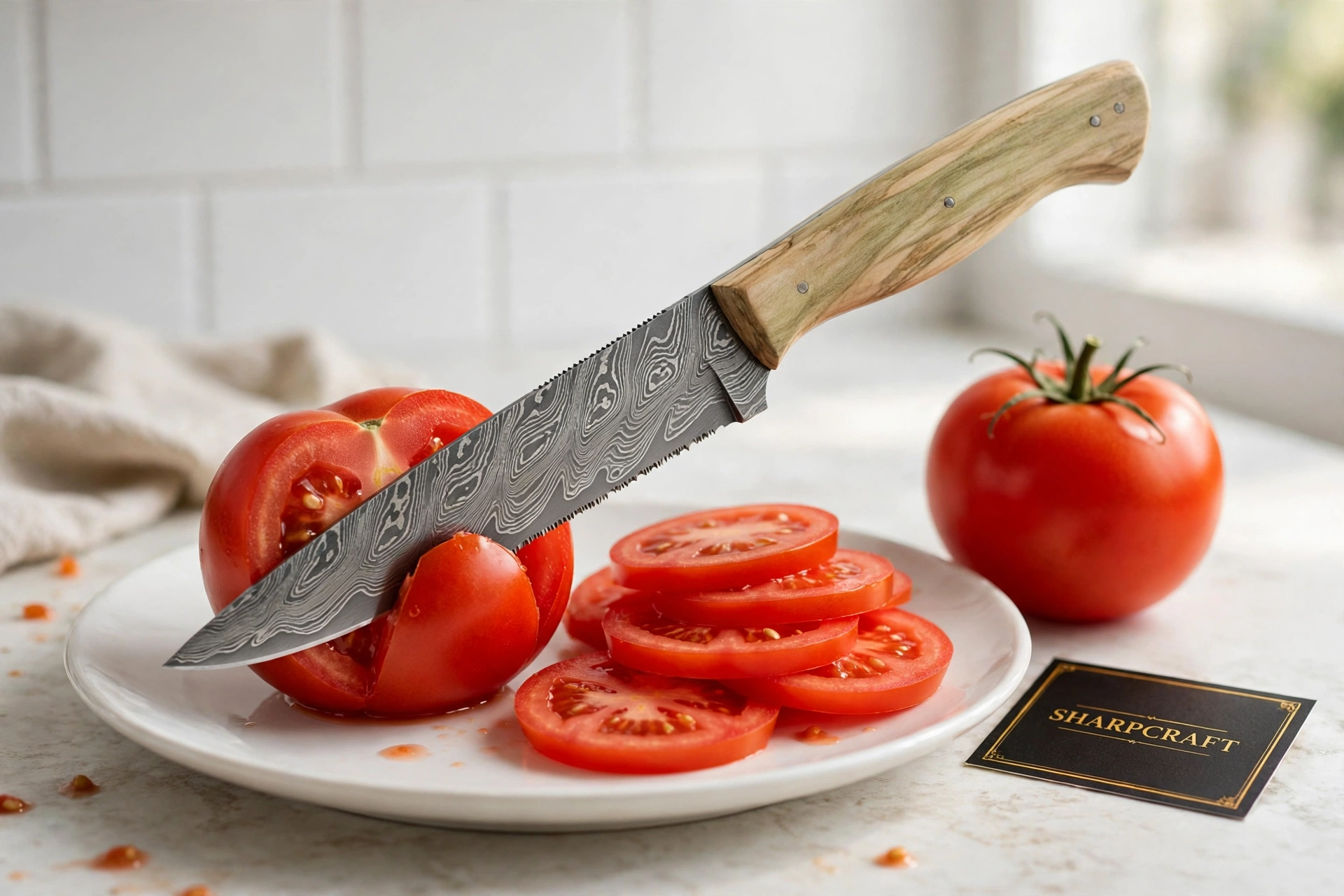
Sharpcraft’s 5-inch tomato knife is described as finely serrated, with an olive wood handle. Send that link together with clear photographs of your actual knife. The listing does not provide a serration pitch, tooth profile measurement or a servicing angle, so do not supply those figures from another knife.
Describe the problem without diagnosing it
Explain what has changed in use and when you noticed it. Include close photographs of any area that concerns you, taken without handling the cutting edge. Avoid deciding from a distant picture that the entire knife needs regrinding. Let the maker or service inspect the actual edge and explain the proposed work.
Ask what the service will preserve
Request an explanation of whether the proposed work retains the existing serrated profile. Ask what equipment will be used and whether any alteration to the profile is expected. Do not assume a slot sharpener or method intended for another knife is appropriate. If the service proposes a different edge style, treat that as a separate decision requiring explicit approval.
Keep a service record
Record the agreed work, quoted cost and any care advice returned with the knife. Confirm packaging and return arrangements with the service rather than assuming they are included. Read the broader sharpening service brief for documentation, and the plain versus serrated edge guide for selection context. Browse Kitchen Knives & Cutters when comparing product references; an edge label alone is not a complete maintenance specification.