
 Canada
 USA
 Japan


Approving a Sample Before a Custom Knife Batch

Define what the sample must answer
A sample is useful when it resolves a specific uncertainty before a larger order. Write down whether you need to assess handle fit, a proposed finish or the placement of branding. Do not treat receiving one sample as approval of every detail in a future batch. Agree which decisions depend on seeing the sample and which can be settled in the written specification.
Choose a precise product baseline
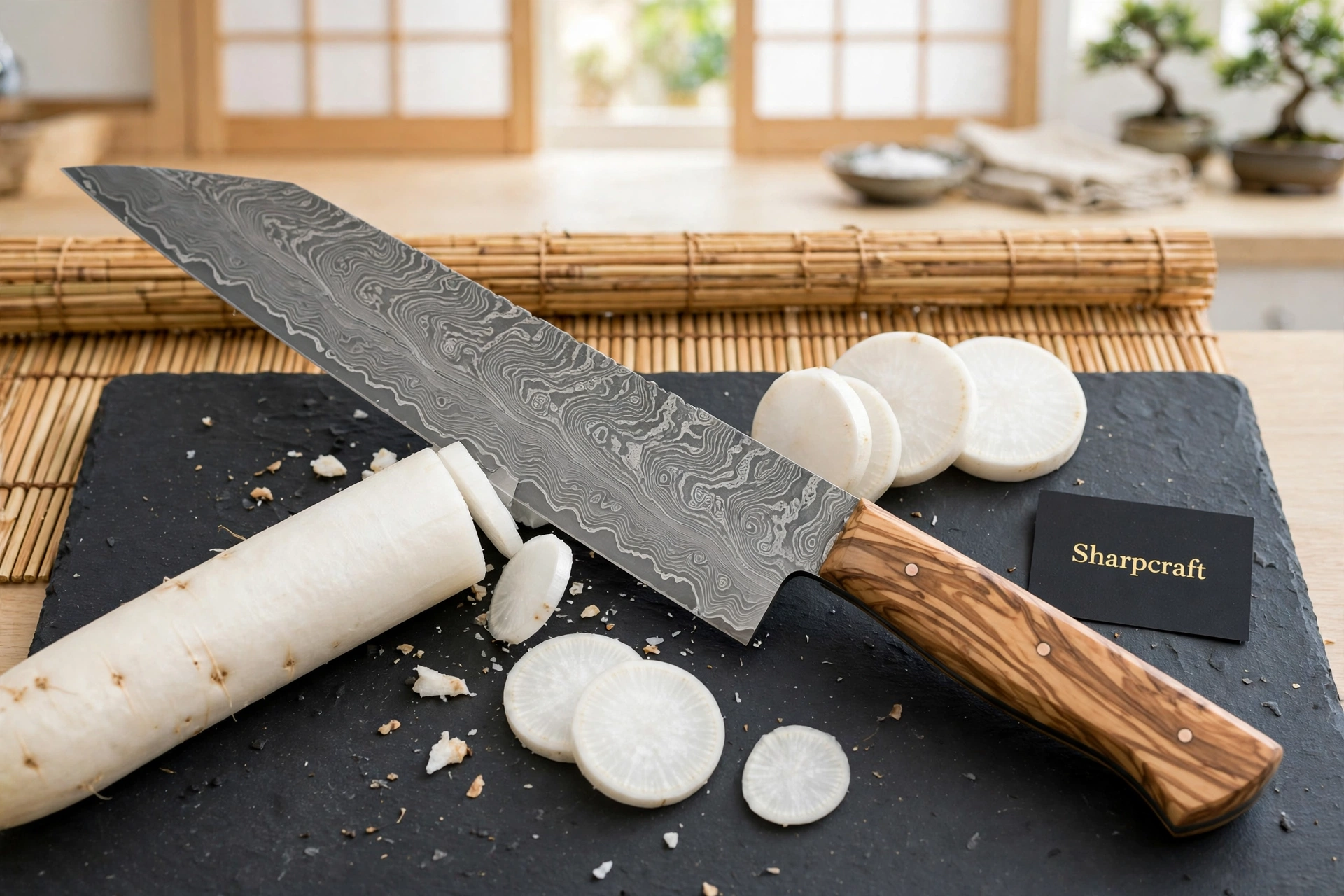
The 8-inch Sharpcraft kiritsuke lists an olive wood handle and a double-bevel blade. If it is your reference, identify which listed features you want retained and which are requested changes. A reference product provides a starting point; it does not establish that a modified sample or a production batch is available.
Create an acceptance record
Use four columns: feature, agreed requirement, sample observation and decision. For example, record the approved wording beside a photograph of the actual marking. Mark an unresolved measurement as pending instead of accepting it by silence. If a detail cannot be judged from an image, state that it needs inspection of the physical sample.
Separate variation from changes
Record which visible differences are expected between handmade pieces. The kiritsuke listing notes variation in Damascus pattern and handle grain. A sample therefore should not become a promise of identical grain on every knife. Ask the maker to distinguish acceptable variation from changes to the agreed material, shape or wording.
Approve the scope in writing
Finish with a dated approval that names the sample and the specification version. List any corrections and ask whether a revised sample is needed. Confirm sample costs, production feasibility and timing separately; none follows automatically from approval. Use the order change record for revisions and the kitchen collection for verified references. The colour approval guide helps document appearance without demanding identical natural grain.