
 Canada
 USA
 Japan


How to Sharpen a Damascus Knife: Keep the Edge and the Pattern

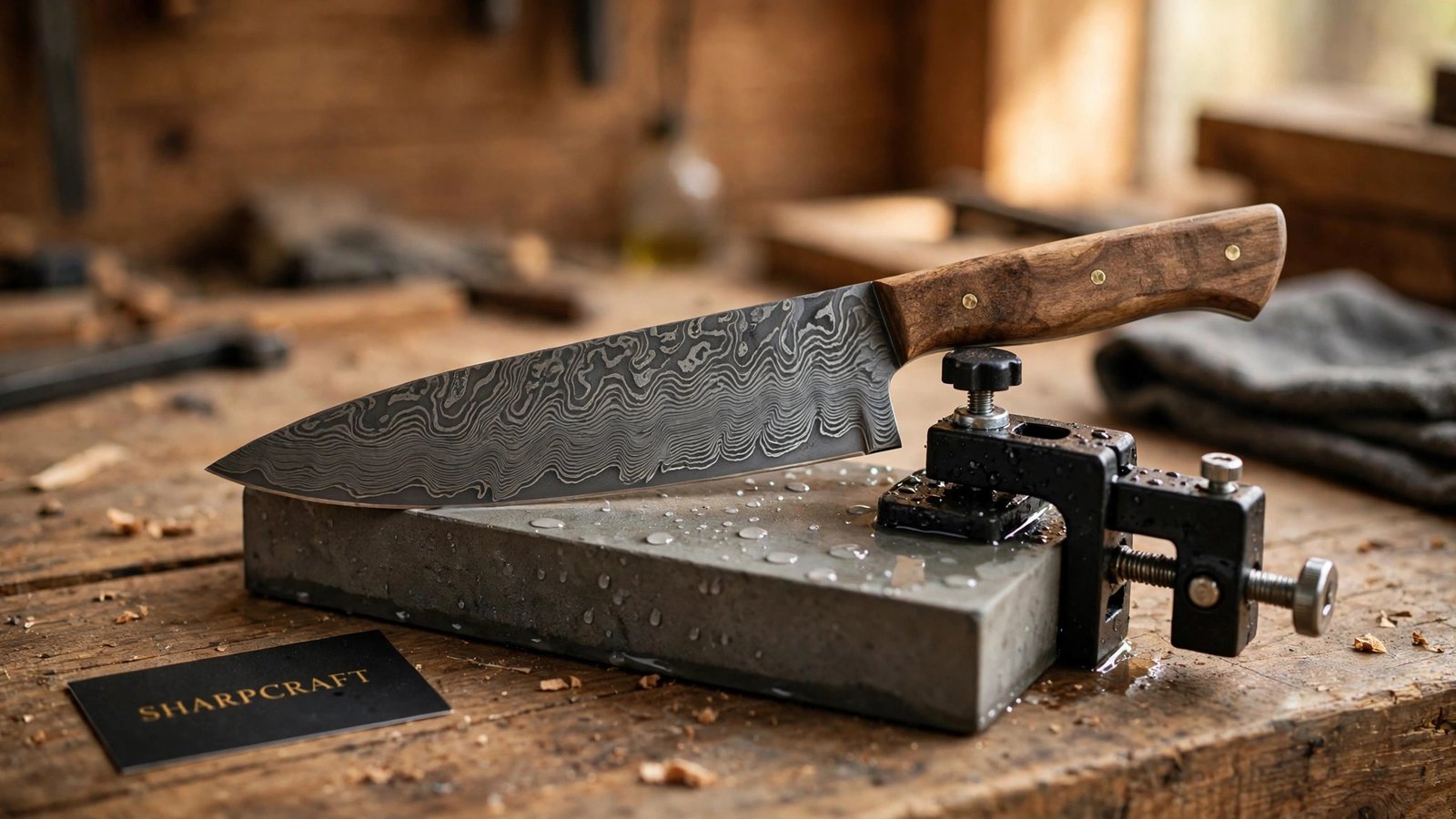
Learning how to sharpen a Damascus knife is simpler than most people expect, and it is mostly the same skill you would use on any good kitchen knife. There are two important differences, though. First, the layered steel shows its pattern best when the edge is clean and even. Second, aggressive grinding can spoil both the edge and the look of the blade. This guide walks you through honing, whetstone sharpening, and stropping, step by step, so you can bring a dull Damascus blade back to a keen, working edge without damaging the pattern that makes it special.
Why Damascus Needs a Gentle Touch
Damascus steel is made by folding and forge-welding layers of steel together, then grinding and etching the blade so the layers show as a flowing pattern. The pattern is in the steel itself, not printed on the surface, so normal sharpening will not erase it. What can harm it is heat and heavy grinding. A powered sharpener or a bench grinder can overheat the thin edge in seconds, and a coarse pull-through sharpener can scratch the flat of the blade and leave an uneven bevel. A Sharpcraft Damascus blade is heat-treated to about 58 to 60 HRC, so it holds an edge well and sharpens cleanly on a stone. Keep your angle steady and treat it gently.
What You Will Need
- A combination whetstone, 1000 grit on one side and 6000 grit on the other
- A honing rod, ceramic or fine steel
- A leather strop, with or without a little polishing compound
- A towel, a small bowl of water, and a clean, dry cloth
- A marker pen, for the angle check described below
Step 1: Hone First, the 30-Second Check
Before you reach for a stone, try honing. A honing rod does not really sharpen a knife. It straightens the microscopic edge, so many knives that feel dull only need honing, and honing takes less than a minute. Hold the rod upright with its tip resting on a towel. Place the heel of the blade against the top of the rod at about 15 degrees, then draw the knife down and across the rod in one smooth stroke, finishing at the tip. Give each side five or six light strokes, alternating sides. Then test the edge by slicing a sheet of paper. If the knife glides through, you are done. If it still drags or tears, move on to the whetstone.
Step 2: Sharpen on a Whetstone, the Angles That Matter
Soak your whetstone in water for about ten minutes, until the bubbles stop. Place the stone coarse side up on a damp towel so it cannot slip. For most Sharpcraft kitchen knives, including the chef knives in the Sharpcraft range, the sharpening angle is 15 degrees per side, which gives a 30-degree included edge. A thicker outdoor blade, such as the Highland Drop Point, can take 17 to 20 degrees per side for a tougher edge.
If you are unsure what 15 degrees looks like, use the marker trick. Colour the edge bevel with the marker pen, make one light pass on the stone, and look at where the ink has been removed. If the ink comes off the whole bevel, your angle is right. If only part of the bevel is clean, adjust the spine up or down until the whole bevel clears. Once the angle is set, work in sections from heel to tip, using firm, even pressure, about the same as writing with a pencil. Make ten slow strokes on one side, then ten on the other. When you can feel a slight burr, a thin wire of steel, along the whole edge on the side away from the stone, the coarse side has done its job. Flip the knife and repeat until the burr moves across, then switch to the fine 6000-grit side and repeat with lighter pressure, about five strokes per side, alternating sides, to polish the edge and remove the burr. Rinse the blade, dry it, and test it on paper. A well-sharpened Damascus knife should cut printer paper cleanly and slice a ripe tomato under its own weight.
Step 3: Strop to Finish
Stropping is the final step, and it is the one most people skip. It removes the last trace of the burr and leaves the edge smooth and keen. Lay the leather strop flat, place the blade on it spine first, and pull the knife toward you, away from the edge, so the edge trails behind. Flip the blade and repeat on the other side, ten to fifteen passes per side with almost no pressure. Never push the edge forward into the leather, or you will cut the strop and roll the edge. After stropping, the knife should glide through paper like a good pair of scissors. If it does not, repeat a few light passes on the fine stone, then strop again.
What NOT to Do With a Damascus Knife
- Do not use a pull-through carbide sharpener. It tears steel off the edge and can scratch the pattern on the flat of the blade.
- Do not use a bench grinder or any powered sharpener. The heat builds up fast at the thin edge and can soften the steel.
- Do not sharpen at a steep angle, such as 25 degrees per side. The edge will feel blunt even when it is sharp, and you will remove far more steel than needed.
- Do not sharpen only one side, or press harder on one side than the other. An uneven bevel steers the knife to one side when you cut.
- Do not put a Damascus knife in the dishwasher or leave it soaking. Wash it by hand, dry it straight away, and put it back in its block or sheath.
Keeping the Pattern Looking New
Sharpening only touches the edge bevel, so the pattern on the flat of the blade should stay untouched if you keep the stone flat and your angle steady. What fades a pattern over time is usually not sharpening at all, but careless cleaning. Never use an abrasive scouring pad or a harsh cleaner on a Damascus blade. After sharpening, wash the knife in warm, soapy water, dry it completely, and rub a very light coat of food-safe mineral oil over the blade with a soft cloth. The oil deepens the contrast of the layers and protects the steel from moisture. Store the knife in a block, on a magnetic strip, or in its sheath. Kept this way, a Damascus chef set will look as good in a year as on the day it arrived, and a pocket folder such as the Kestrel Slim Folder will keep its pattern for years.
How Often Should You Sharpen?
How often you sharpen depends on how much you cut, not on the calendar. A home cook who uses a chef knife most days should hone it once a week and take it to the whetstone every two or three months. A knife used only at weekends may go six months between stone sessions. The paper test is the honest judge: if the knife still slices paper cleanly after honing, it does not need the stone yet. Sharpening more often than needed only wears the blade down faster. Little and often is the rule.
A Sharp Edge, Kept Well
Sharpening a Damascus knife comes down to three habits: hone often, sharpen at a steady 15 degrees on a whetstone when honing is no longer enough, and strop to finish. Keep powered sharpeners and abrasive cleaners away from the blade, and oil it lightly now and then. Do that, and your knife will stay sharp, safe, and good to look at for years. If your kitchen needs a fresh start, browse the Sharpcraft chef knives and Damascus knives and keep your new blade sharp with the steps above.