
 Canada
 USA
 Japan


Tomato Knife vs Utility Knife: Compare the Listings

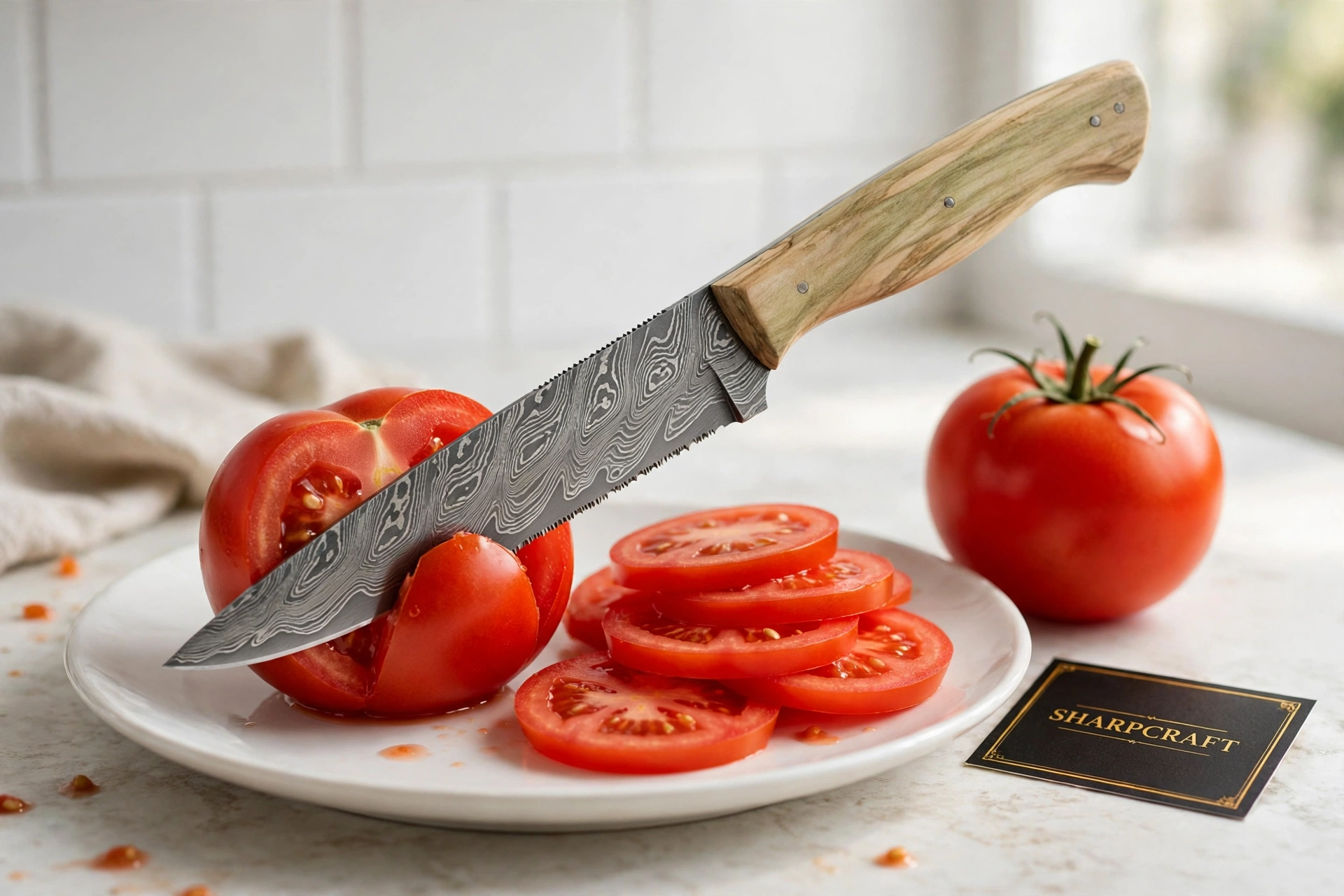
Sharpcraft’s tomato knife and utility knife both carry a five-inch blade label and name olive wood handles. That does not make their listings interchangeable. Before choosing one, compare the edge description, complete dimensions and the preparation jobs you actually want covered.
Start with the stated edge
The Damascus Tomato Knife listing explicitly describes a finely serrated blade. The Damascus Utility Knife describes a five-inch blade and smaller everyday kitchen tasks, but its specification does not separately label the edge type. If that distinction determines your purchase, ask the team to confirm the utility knife’s exact edge rather than classifying it from its name.
Recognise overlapping uses
Both listings mention tomatoes and sandwiches among their intended kitchen roles. An overlapping ingredient list is a reason to clarify your preference, not proof that you need both products. Explain whether you are adding a specialist serrated knife or replacing a small knife you already use. Do not turn a product’s food-release or slicing description into a guaranteed result for every ingredient.
Compare the whole knife
The tomato listing gives approximate overall and handle lengths of 9.5 and 4.5 inches. The utility listing gives approximately 10 and five inches respectively. These are design targets, so request confirmation when storage or handle fit is critical. The shared blade label alone does not establish identical proportions.
Check maintenance and accessories
Both current standalone listings include a leather sheath and care card, and exclude a sharpening stone, oil and display stand. Ask for maintenance guidance for the confirmed edge. Our edge comparison covers the terminology, while the sharpening service brief helps identify an exact knife to a maintenance provider.
Make a focused selection request
Send both references through the enquiry form with your ingredients, current small knife and the change you want. Explore Kitchen Knives & Cutters for alternatives. Choose around the missing role in your kitchen rather than collecting two names for jobs one confirmed configuration may already cover.