
 Canada
 USA
 Japan


Kitchen Knife Hardness: What HRC Means

An HRC number can look like a simple score for a kitchen knife. It is more useful when read as one specific material measurement, supported by information about the exact product. A larger number alone does not answer whether a knife fits your cooking routine or how you should maintain it.
Read the scale as well as the number
Böker’s technical glossary identifies HRC as a hardness result on the Rockwell C scale used for steel knife blades. The test concerns resistance to indentation. A bare number without its scale and product context is incomplete information; it should not be confused with blade length, a steel grade or a layer count.
Hardness is one part of the specification
Keep separate entries for the steel description, hardness, blade dimensions, edge configuration and care instructions. These answer different questions. A hardness claim is not a statement that the product is corrosion-proof, dishwasher-safe or suitable for every kitchen task. Ask for those relevant instructions directly rather than filling the gaps with assumptions.
If two listings give different forms of information—one a specific figure, another a range—record them as written and ask what each refers to. Do not turn a range into an exact test result or present an approximate figure as a certificate for the individual knife.
Use Sharpcraft’s listing without adding a rating
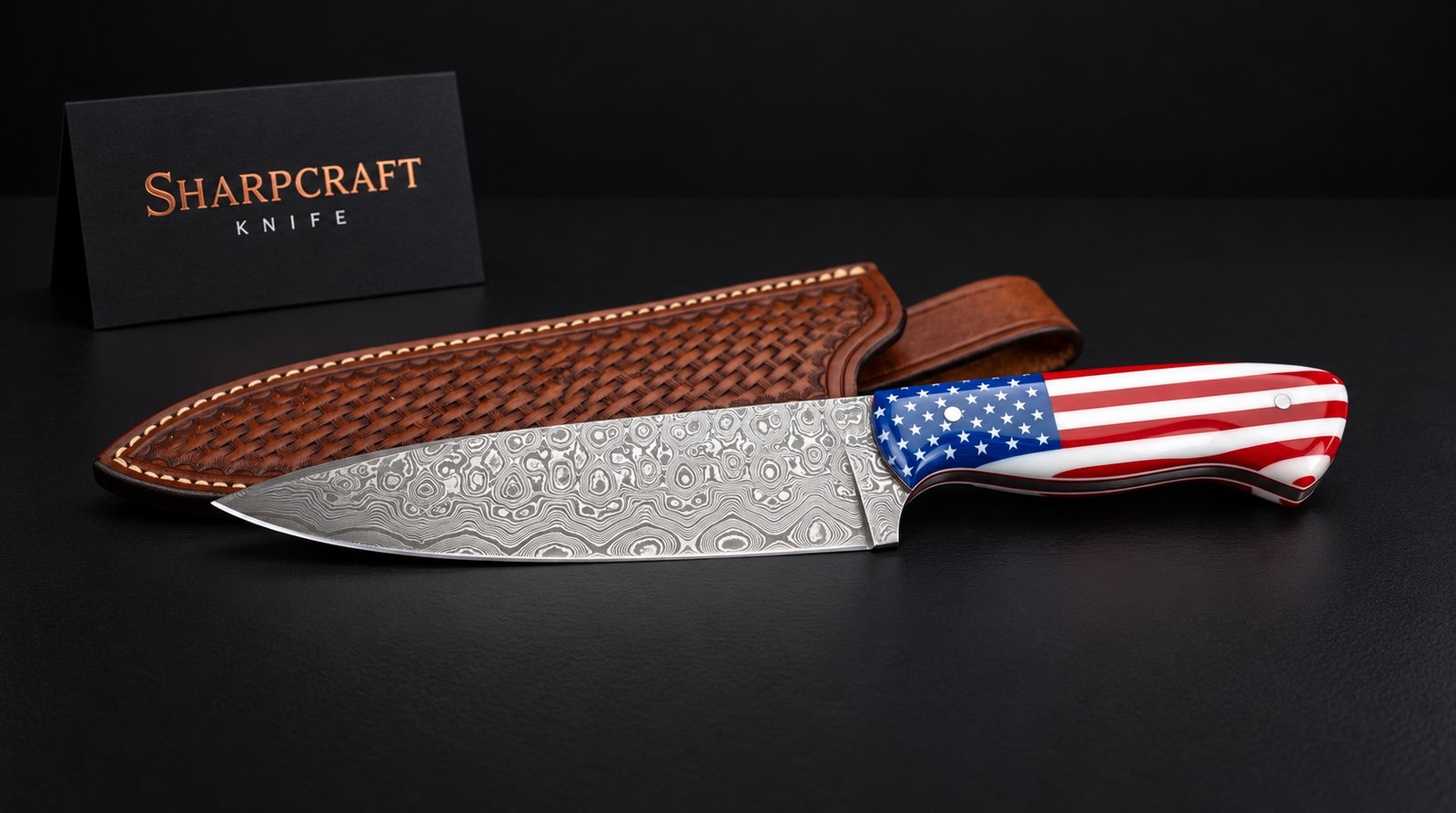
The American Flag Handle Damascus Chef Knife supplies a visual design reference and care information. The current listing does not provide a confirmed HRC result. This guide assigns no hardness number to it. The visible blade pattern and the handle design cannot supply that missing specification.
The same discipline applies when browsing chef knife sets: ask whether a stated specification covers every piece in the proposed set. Coordinated handles do not establish identical blade measurements or a shared test result.
Ask for evidence in proportion to the claim
A useful request is: “What hardness information is confirmed for this exact product, and is that a target specification, a stated production range or an individual test result?” If a certificate is offered, confirm what item or batch it identifies. Keep an unanswered question marked unconfirmed instead of borrowing a number from a similar-looking knife.
Connect the specification to ownership
Before deciding, obtain the intended-use and maintenance guidance for the knife itself. Read Damascus kitchen knives beyond the pattern for the difference between appearance and construction information, and honing versus sharpening before selecting maintenance tools. Browse the kitchen collection with that information together.
Technical reference: Böker’s HRC glossary. Its general examples are not Sharpcraft test results.