
 Canada
 USA
 Japan


Honing vs Sharpening for Kitchen Knives

Honing and sharpening are often used as if they mean the same thing. Understanding the distinction helps you ask a more useful care question and avoids choosing a maintenance tool purely from its name. This is a guide to planning maintenance, rather than a set of sharpening angles for an unidentified blade.
Know which job you are discussing
WÜSTHOF distinguishes regular edge realignment with a honing steel from sharpening that removes metal to create a new edge. Its guidance also describes diamond and ceramic sharpening steels as abrasive tools that remove material. In other words, the word “steel” in a product name does not tell you that the tool only realigns an edge.
That distinction matters when reading a maintenance recommendation. Ask what the proposed tool does, which edge it is intended for and whether the knife maker recommends it for your product. A routine suitable for one knife should not be transferred automatically to another.
Identify your knife before buying a tool
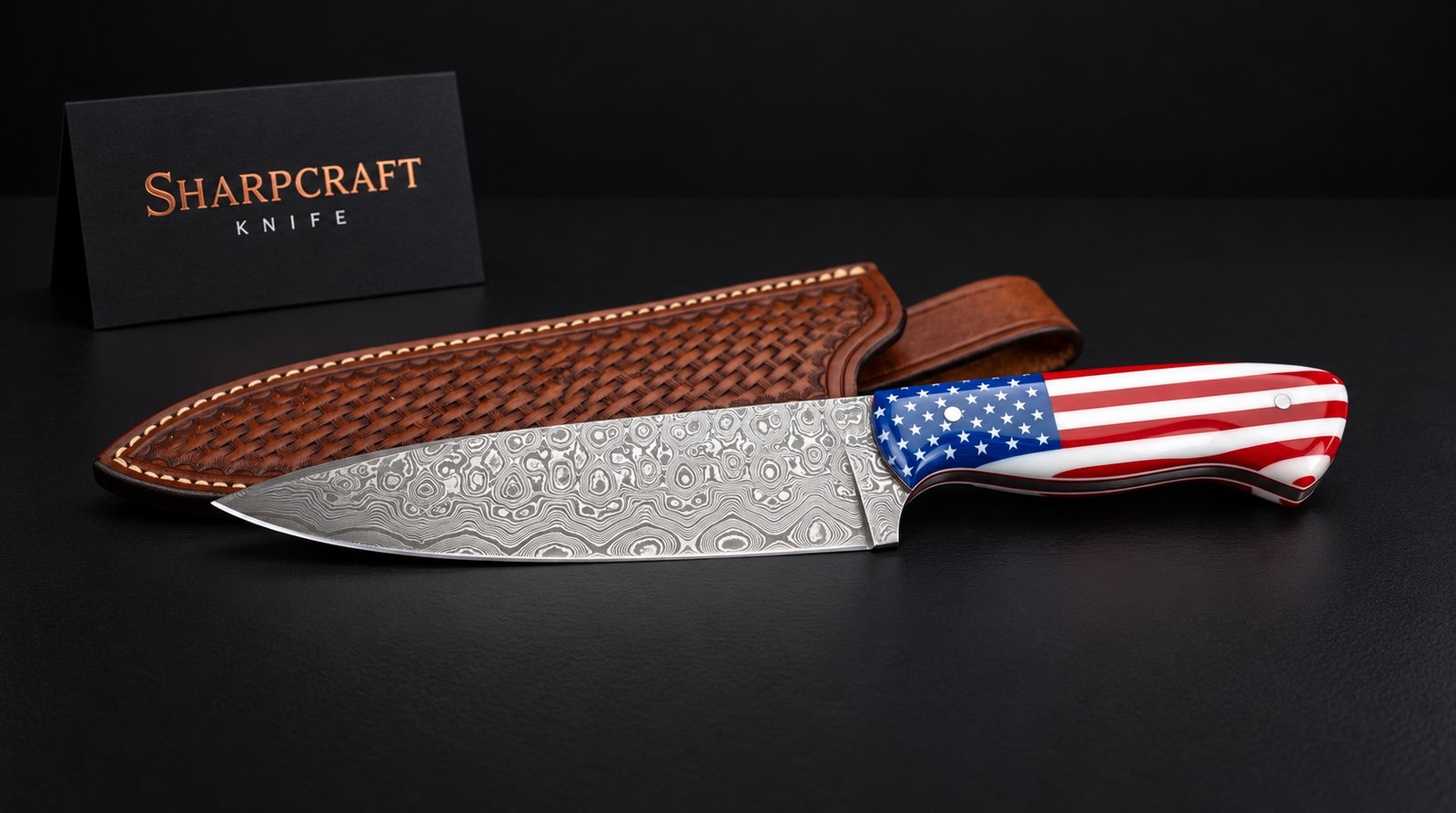
For a product such as the American Flag Handle Damascus Chef Knife, send the exact listing rather than a general description such as “my Damascus knife”. For a set, identify each piece separately. The photograph and handle colour are useful references, but neither establishes the edge angle, hardness or abrasive method that should be used.
Ask the supplier to confirm the edge type, recommended maintenance tool and any product-specific restrictions. Keep unanswered details marked as unconfirmed. Do not borrow another brand’s numerical angle or maintenance timetable merely because the blade shape looks familiar.
Describe the change you have noticed
A useful enquiry describes the current issue and the knife’s history: when its behaviour changed, what maintenance has already been done and which tools were used. If there is visible damage, ask for an assessment rather than assuming ordinary honing will resolve it. Photographs can support the enquiry, but a supplier may need more information to recommend the next step.
Ask about a service before assuming one is included
If you prefer professional maintenance, confirm whether a service is offered, what it covers and whether any cost or shipping arrangements apply. This article does not promise free sharpening or a particular service from Sharpcraft. Record the agreed instructions with the product reference so that later maintenance follows the same specification.
Make maintenance part of the handover
For a shared kitchen or a gift, pass on the confirmed method and the identity of any recommended tool. Use our care information card to keep that information together. Cleaning and storage remain separate parts of the everyday care routine.
Explore kitchen knives and cutters or chef knife sets. For a product-specific answer, send the product link with your enquiry.
Technical reference: WÜSTHOF: Using a Steel. Its model-specific angles and tool specifications should not be treated as Sharpcraft specifications.