
 Canada
 USA
 Japan


Gyuto vs Santoku: Which Japanese Chef Knife Belongs in Your Kitchen?

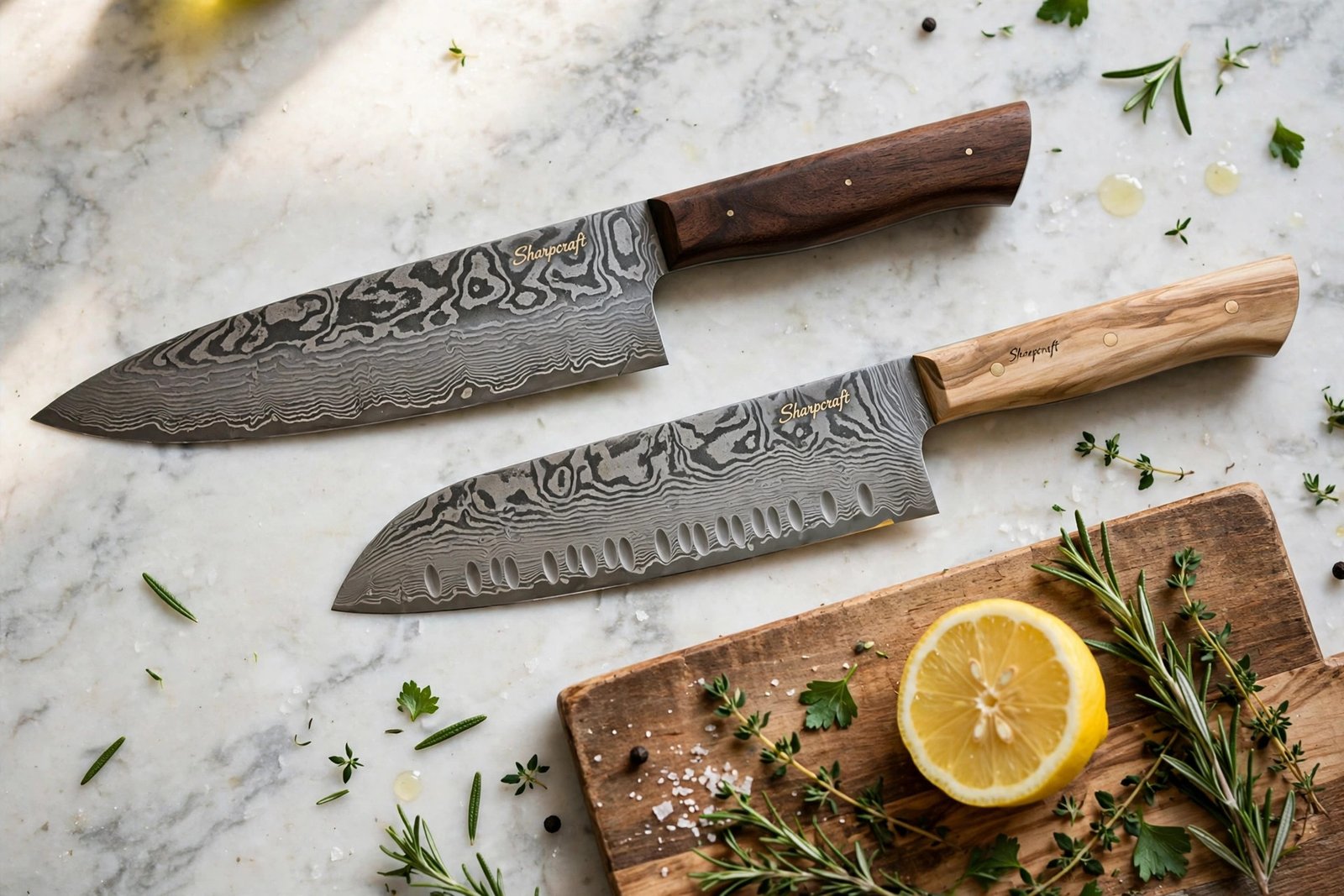
Two Japanese blades now lead the modern kitchen — the gyuto and the santoku. They look alike at a glance, but they cut differently, feel differently, and suit different cooks. Here is how to choose.
WHAT IS A GYUTO?
The gyuto is the Japanese take on the Western chef’s knife. A long, gently curved blade — usually 8 inches — with a pointed tip that rocks and slides through food. It is the all-rounder: slicing meat, dicing onions, mincing herbs, and long draw cuts. If you could own one Japanese chef knife, most cooks start here.
WHAT IS A SANTOKU?
Santoku means “three virtues” — it slices, dices and minces with equal ease. Its blade is shorter and wider, usually 7 inches, with a sheepfoot-style tip and a flatter edge. The flat profile suits straight up-and-down chopping, and the Granton hollow edge (small dimples along the blade) keeps thin slices from sticking. It feels nimble and controlled, especially in smaller hands and smaller kitchens.
GYUTO VS SANTOKU — SIDE BY SIDE
Gyuto: 8-inch blade, pointed tip, curved edge, rocks and slides, best all-rounder, suits larger boards and bigger prep. Santoku: 7-inch blade, sheepfoot tip, flatter edge, straight chopping, Granton edge stops food sticking, suits compact kitchens and precise work.
WHICH ONE SHOULD YOU CHOOSE?
Choose the gyuto if you want one knife for everything, you have a full-size cutting board, and you like a rocking cut. Choose the santoku if you mostly chop vegetables and fish, your board is small, or you prefer a lighter knife that stays flat on the board. Many home cooks end up owning both — gyuto for the heavy prep, santoku for the everyday chopping.
WHY DAMASCUS STEEL MAKES THE DIFFERENCE
Both styles shine in hand-folded Damascus steel. The layered blade holds a keen edge at 58–60 HRC, slices cleanly without wedging, and each pattern is unique to the knife. A full tang and a hardwood handle — walnut for the gyuto, olive wood for the santoku — balance the blade in the hand.
CARING FOR YOUR JAPANESE CHEF KNIFE
Hand wash and dry straight after use, never put it in the dishwasher, hone the edge regularly, and store it in its leather sheath or on a magnetic strip. With that care, a handcrafted Damascus chef knife will serve for decades.
Our new handcrafted Damascus gyuto and santoku are live in the Chef Knife Sets collection now — one knife, or both, made to be used every day.