
 Canada
 USA
 Japan


Walnut Burl Knife Handles: Approving the Grain

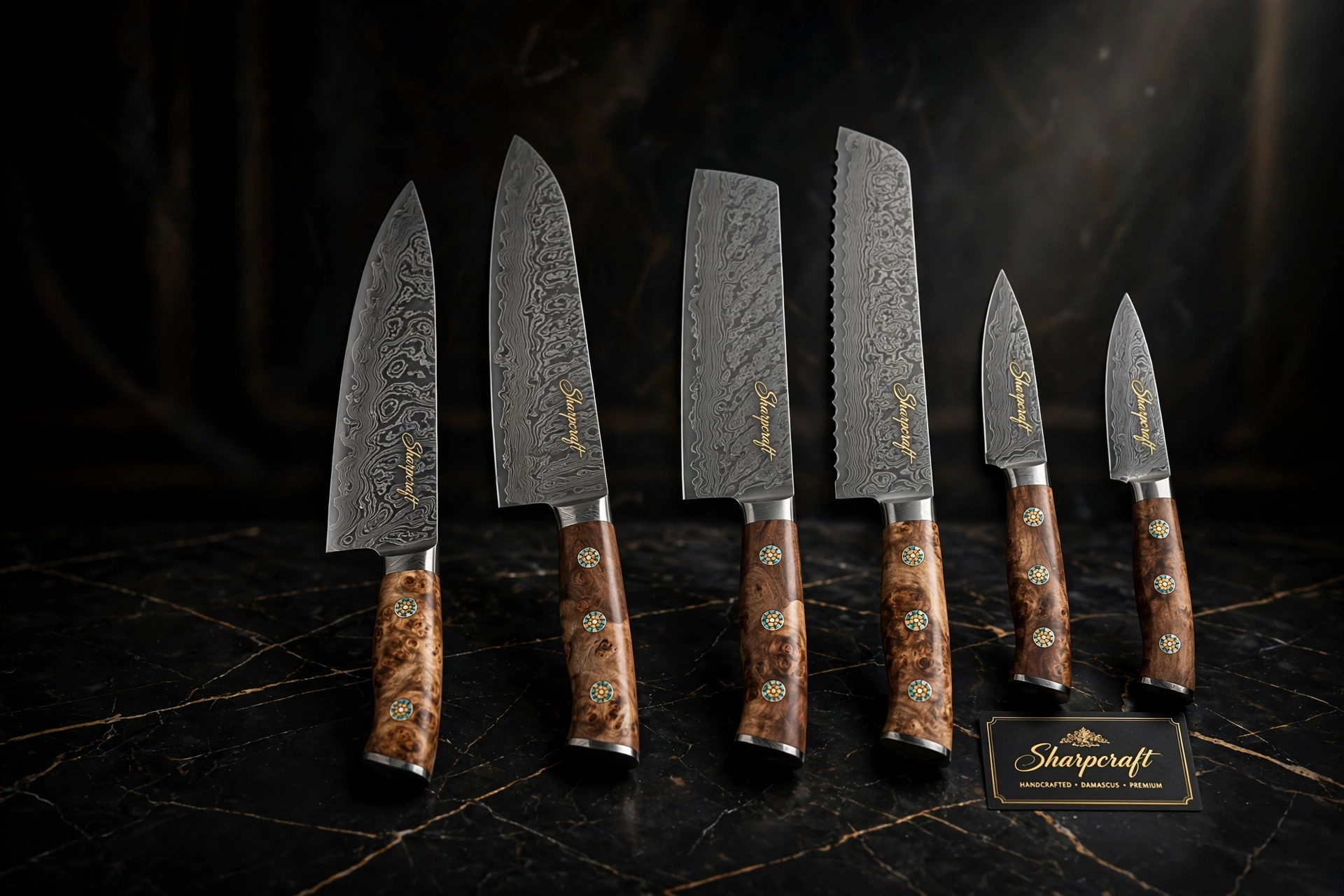
Start with the named material
A patterned wood handle can be a major part of a kitchen knife’s appeal. If you prefer a particular grain arrangement, describe that preference before approving the order. A reference photograph helps communicate the direction, but it should not become a promise that every handle will reproduce the same pattern.
Use the Premium set as a reference
The Premium Chef Set lists walnut burl handles and mosaic pins across six knives. Its inventory includes chef, santoku, nakiri, bread, utility and paring profiles. The description explicitly notes that handle grain varies between handcrafted pieces. Keep the material name, pin design and grain preference as three separate entries in your brief.
Request views of the proposed pieces
Ask whether photographs of the actual proposed handles can be supplied. Request both sides of each handle under consistent lighting, with pieces numbered to match the inventory. A close-up of one attractive handle does not show how the six look together. Also ask which images are examples and which depict pieces reserved for your order.
Define matching without demanding duplication
Describe the visual relationship you want: similar overall darkness, a coordinated range of grain movement or a deliberate mix. Leave room for the maker to confirm what can be supplied. Avoid assuming that a dark patch is a defect or that a lighter area is a different species based only on a screen image. Ask for an explanation where a feature concerns you.
Record the complete approval
Save the approved photos alongside the written material and finish description. If a handle is changed later, review its appearance with the rest of the set. Follow the colour approval guide for lighting questions and the handle finish guide before applying care products. Browse Chef Knife Sets for other named combinations. Grain approval addresses appearance; it does not establish finish chemistry, exact dimensions or future availability.