
 Canada
 USA
 Japan


Planning a Matching Knife Collection: A Custom Order Guide

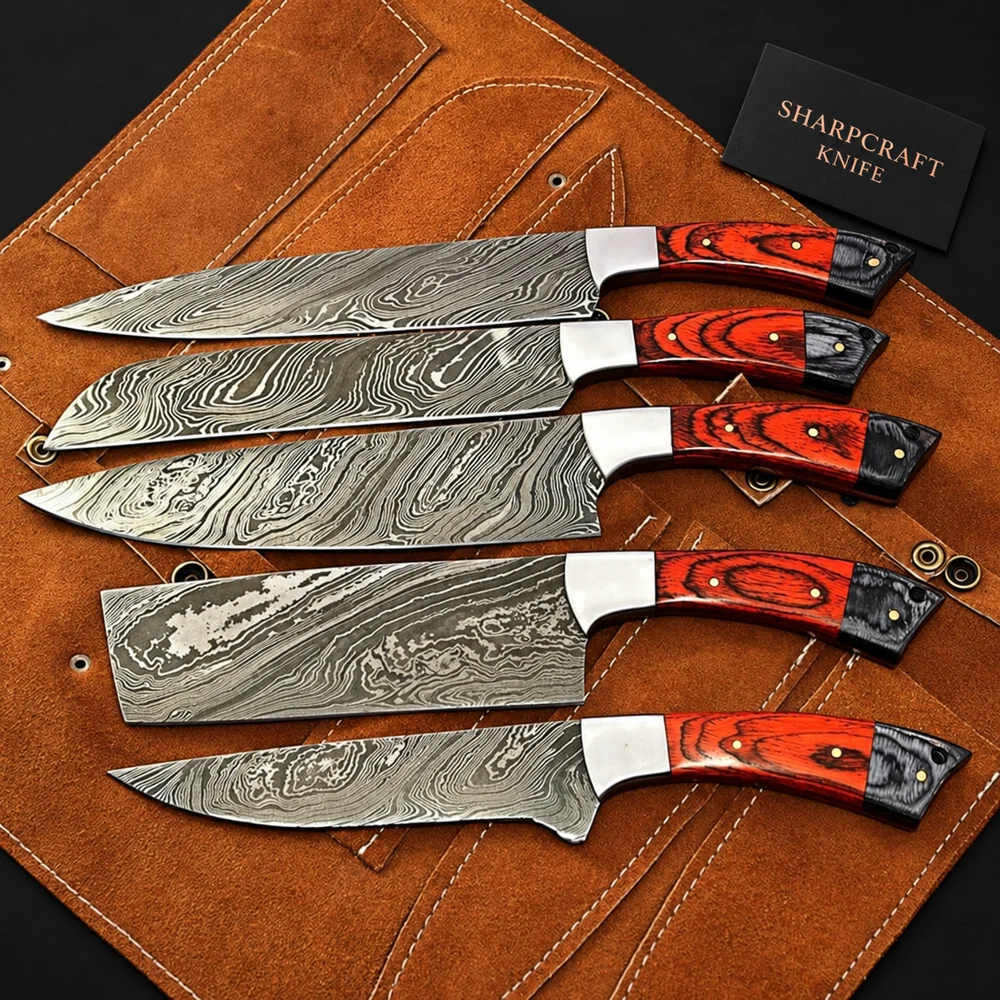
A coordinated knife collection starts with a clear list of pieces and a shared visual direction. Matching does not have to mean that every knife is identical. You might want a related handle colour, a consistent finish or a set presented together. Writing those preferences down makes the quotation and design discussion more useful.
Define the collection before choosing details
List each piece you want and the reason it belongs in the set. For a kitchen collection, identify the individual knife shapes you are requesting rather than using only a piece count. For a mixed collection, distinguish between pieces that should match closely and pieces that need their own design discussion.
Browse the chef knife sets for collection references, or the full Sharpcraft shop when comparing different styles. Include product links in your enquiry so the team can see which examples you mean. Confirm the final contents rather than assuming every photographed accessory is included.
Choose a visual thread
Decide which visible details you want to coordinate: handle colour, decorative fittings, blade appearance or the presentation of the set. Rank those preferences. If the handle colour matters most, say so. If you are flexible about the rest, explain that as well. A focused brief is easier to discuss than a long list of unrelated references.
Natural-looking grain and patterns can vary between pieces, so ask what degree of consistency can be offered for the proposed materials. Do not use a photograph alone to confirm a material or exact repeatability. Our guide to choosing a handle style gives you questions to use in that discussion.
Record details for each piece
Prepare a simple list with the item name, quantity, requested dimensions, handle preference and required accessory. Keep set-wide preferences in a separate note. This makes it clear whether a change applies to one knife or the whole collection.
Use our dimensions guide when preparing your measurement requests. If sheaths are part of the set, read the sheath ordering checklist and confirm the accessory for each individual piece. A shared visual style does not establish that one sheath fits every knife.
Agree what needs approval
Ask what the team can provide for review before you confirm the order. This might include a written item list, agreed materials, dimensions or reference photographs. Keep the discussion attached to the same product references so that later changes can be checked against the original brief.
If you are ordering for more than one person, choose one final list of preferences before requesting a quotation. Confirm the total quantity and destination together with any requested timing. For repeated or larger quantities, our bulk enquiry checklist covers the information to prepare.
Submit a clear collection brief
Send the item list, your visual references and any accessory requirements through the custom order form. Include a note explaining which details are essential and which are open for discussion. The team can then confirm feasibility, the quotation and expected timing for the proposed collection.
Before choosing your reference images, use our guide to comparing product photos. A complete brief and clearly identified references help keep the collection consistent from the first enquiry to the final confirmation.
To compare two coordinated kitchen collections, view the five-piece Damascus kitchen set and the stacked wood chef knife set. Use the product links in your brief and confirm which pieces, handle details and accessories should be carried into your requested collection.
For kitchen collections, use our single knife or knife set comparison to organise the pieces, handles and accessories you want to discuss.